Mercedes-Benz eArocs 400 Specs: Electrifying Heavy-Duty Construction Operations
The heavy-duty construction sector faces a massive shift toward electrification as urban emission regulations tighten across the globe. Fleet operators now look at the Mercedes-Benz eArocs 400 as a viable replacement for diesel-powered tippers and mixers. Daimler Truck confirmed that order books for this specialized battery-electric construction truck open in April. This vehicle targets short-range, heavy-load applications where zero-emission zones dictate operational capability.
Technical Architecture and Electric Drivetrain
The Mercedes-Benz eArocs 400 truck utilizes a powertrain architecture derived from the proven eActros series. Specifically, the truck features an electric axle with two integrated motors and a three-speed transmission. This configuration allows the vehicle to provide consistent torque across a wide range of speeds. The system delivers a continuous output of 330 kW (442 horsepower). By utilizing a peak output of 400 kW (536 horsepower), the vehicle handles steep grades and soft terrain common in excavation sites.
Energy storage relies on three lithium-ion battery packs. Each pack possesses an installed capacity of 112 kWh, resulting in a total installed capacity of 336 kWh. Looking at the data, the usable capacity sits at approximately 291 kWh. This energy density supports typical daily construction cycles, including the power required for the chassis and the attached superstructure. In addition, the placement of the batteries within a protected steel frame helps safeguard the cells from impact and debris.
From an expert perspective, the core operational capabilities are defined by the following specifications:
Continuous Output: 330 kW (442 hp)
Peak Output: 400 kW (536 hp)
Transmission: 3-speed PowerShift
Battery Configuration: 3 Lithium-Ion Packs
Installed Capacity: 336 kWh
Usable Capacity: 291 kWh
System Voltage: 400 Volts
Power Take-Off and Superstructure Integration
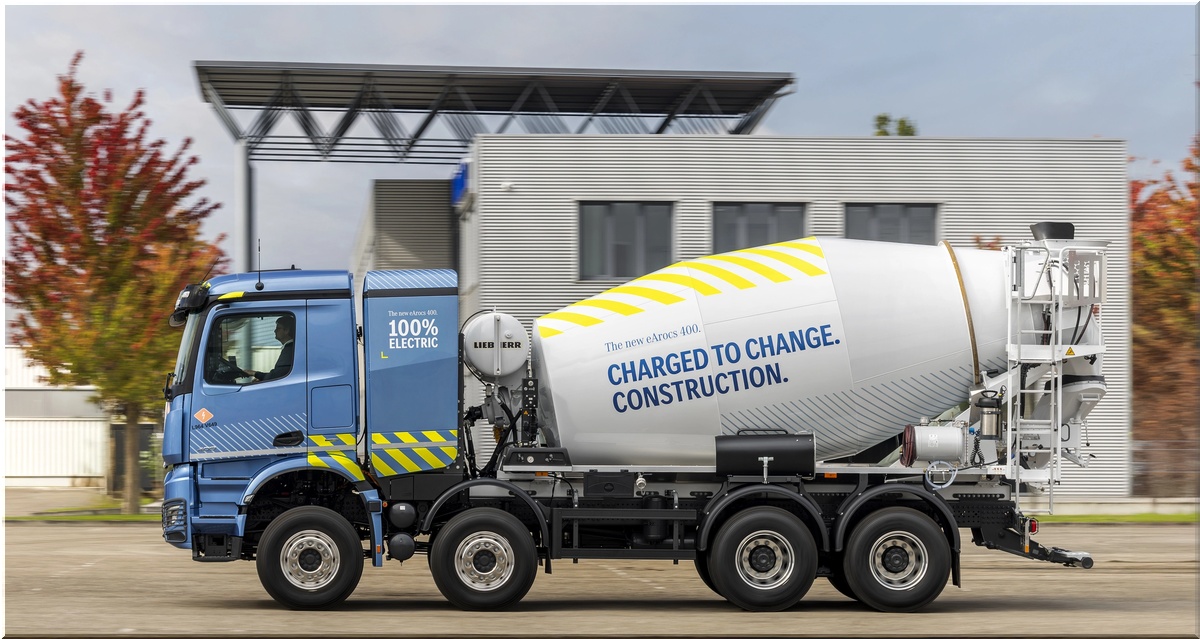
Construction trucks require mechanical energy for more than just forward motion. The eArocs 400 addresses this through an integrated electric Power Take-Off (ePTO) system. This system converts DC power from the high-voltage batteries into AC power to drive hydraulic pumps or electric motors for mixers. Specifically, the ePTO allows for the operation of bodies like the Liebherr ETM 905 truck mixer or Meiller tippers without an idling internal combustion engine.
From an expert perspective, the efficiency of the ePTO significantly reduces total energy consumption compared to diesel counterparts. Traditional mixers waste significant fuel while waiting at a job site to pour concrete. The eArocs 400 only consumes energy when the drum rotates or the tipper bed lifts. Consequently, the truck maintains a quieter profile, which permits early morning or late-night operations in residential neighborhoods.
Body Specifications and Measurements
The vehicle typically arrives in an 8x4 axle configuration for mixer applications. This setup provides the necessary stability for carrying high-density loads like wet concrete. A standard wheelbase for these configurations measures approximately 4,500 mm (177.1 inches). By comparison, the overall height and width remain consistent with the diesel Arocs models to allow for standardized body mounting processes.
Liebherr ETM 905 Mixer: This body features a 9-cubic-meter (11.7 cubic yards) capacity.
Meiller Tipper: The hydraulic system for the tipper connects directly to the high-voltage ePTO for rapid unloading.
Chassis Weight: The heavy battery packs increase the tare weight, requiring operators to determine payload adjustments based on local gross vehicle weight (GVW) limits.
Charging Infrastructure and Efficiency
Charging the eArocs 400 requires a standard CCS2 connection. The vehicle supports DC fast charging at rates up to 160 kW. When connected to a high-power charging station, the batteries can charge from 20 percent to 80 percent in approximately 75 minutes. This timeframe aligns with midday breaks or the transition between work shifts.
Recuperation plays a significant role in extending the operational range of the heavy-duty electric truck. As the driver releases the accelerator or applies the brake, the electric motors act as generators. This process converts kinetic energy back into electricity, which then flows into the battery packs. This feature proves highly effective in "stop-and-go" urban construction traffic or when descending steep grades with a full load.
Looking at the data, the charging and energy recovery parameters include:
Charging Connection: CCS Combo 2
Maximum DC Charge Rate: 160 kW
Charge Time (20% to 80%): Approximately 75 Minutes
Nominal Voltage: 400V
Recuperation Levels: Multiple Stages (Driver Selectable)
Pro-Tips for Electric Fleet Management
Definition: ePTO (Electric Power Take-Off) The ePTO is a high-voltage interface that provides electrical energy to auxiliary equipment. It replaces the mechanical shaft or hydraulic pump traditionally connected to a diesel engine's transmission.
Pro-Tip: Maximize Efficiency with Pre-Conditioning Operators should use the vehicle's thermal management system to pre-condition the batteries while the truck remains plugged into the charger. Heating or cooling the battery packs using grid power preserves the stored energy for driving and drum rotation, extending the effective work radius.
Operational ROI and Strategic Implementation
The decision to transition to the Mercedes-Benz eArocs 400 depends on a detailed analysis of daily route lengths and site infrastructure. While the initial acquisition cost exceeds that of a diesel Arocs, the reduction in maintenance and fuel expenses offsets the investment. Electric motors contain fewer moving parts than internal combustion engines, which eliminates the need for oil changes, exhaust after-treatment servicing, and fuel filter replacements.
In addition, many municipalities offer subsidies or preferential access for zero-emission construction vehicles. By deploying the eArocs 400, companies position themselves to win contracts in cities with strict environmental mandates. The vehicle provides the necessary power to move heavy aggregates while meeting the noise-reduction requirements often found in "green" building certifications.
What Now for Fleet Operators?
Interested parties should first audit their current duty cycles. If a mixer or tipper operates within a 200-kilometer (124-mile) radius and returns to a central hub daily, the eArocs 400 fits the profile. The next step involves verifying the electrical capacity at the depot to support 160 kW chargers. Once the infrastructure is ready, the April order window provides the opportunity to secure early production slots for the 2025/2026 delivery cycle.
The Mercedes-Benz eArocs 400 represents a logical progression for the construction industry. It combines the rugged chassis of the legendary Arocs line with the quiet, efficient performance of the eActros powertrain. This synergy allows construction firms to maintain high productivity while drastically reducing their carbon footprint.