Fiat's Grizzly Twins Arrive: Same Platform, Different Tailgates
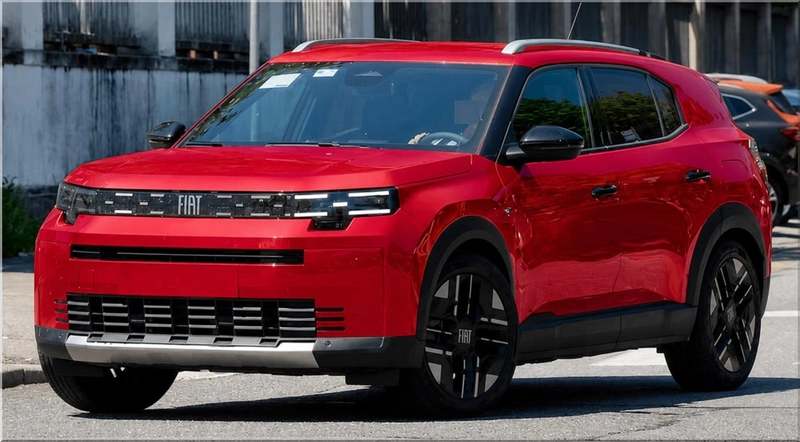
Fiat finally admitted that making a profit in the C-segment requires sharing bones with a city car and building it in a Moroccan factory. The company revealed the Grizzly SUV and Grizzly Fastback on June 3, 2026, which conveniently coincided with its 127th anniversary—because nothing says "happy birthday" like announcing a front-wheel-drive crossover with plastic cladding.
Sales commence in Europe, the Middle East, and Africa during the second half of 2026. UK customers get their turn in 2027. Latin America waits until 2027 as well, presumably because the existing Pulse and Fastback models need to clear out of the showrooms first.
The Strategic Logic, or Why You Cannot Buy a Real Bear
The Fiat Grizzly name implies ruggedness. It suggests a vehicle that can climb rocks, ford rivers, and intimidate lesser crossovers in the Costco parking lot. The reality is more pragmatic. Fiat's CEO, Olivier Francois, framed this as "democratic mobility," which translates to "we need to sell a lot of these at a thin margin to keep the factory lights on."
Both variants ride on Stellantis' Smart Car platform. This architecture also underpins the Grande Panda, the Citroën C3 Aircross, and the Vauxhall Frontera. Consequently, the Grizzly twins inherit that platform's constraints and its cost-saving virtues. The wheelbase stretches to roughly 2.7 meters. The track widths are standard fare. Nothing about this platform screams "off-road." It screams "parts-bin efficiency."
Production happens in Kenitra, Morocco. This is a shrewd industrial decision. It provides cheaper labor, proximity to European ports, and avoids the tariff headaches of building within the EU. It also means your new Grizzly has a more interesting passport stamp than you do.
Powertrain Lineup: Petrol, Juice, or a Little Bit of Both
Fiat offers a full spectrum of engine options because offering choices is how you sell to German commuters, Brazilian taxi drivers, and European fleet managers simultaneously.
Here is the complete powertrain roster:
1.2-liter three-cylinder turbo petrol: Output ranges from 110 to 145 horsepower, depending on how aggressive the market's emissions regulators allow the tune to be. Available with a manual gearbox or an automatic. For traditionalists who enjoy the smell of hydrocarbons.
1.2-liter mild hybrid: The same three-cylinder, but with a 48-volt belt-starter-generator and a small battery under the seat. This improves urban fuel economy by a measurable margin, though the exact improvement requires a slide rule and a test track to verify. Also offered with manual or automatic transmission.
Battery-electric (44 kWh LFP): Entry-level EV with roughly 113 horsepower and an estimated range of 300 kilometers (186 miles) on the WLTP cycle. Suitable for school runs, grocery trips, and not much else beyond the city limits.
Battery-electric (54 kWh pack): The range-topping EV with just over 400 kilometers (248 miles) of estimated range. This is the one you buy if you have a garage, a dedicated wallbox, and a tolerance for range anxiety that only afflicts you on cold winter days.
By comparison, the electric variants all produce the same modest 113 horsepower output regardless of battery size. The 54 kWh pack is the logical choice for most buyers, provided they have the extra €2,000 to spend on capacity they will use twice a year.
Essential Measurements: The Numbers That Actually Matter
Here is the dimensional data, converted from a table to a straightforward list for easier digestion.
For the Grizzly SUV (the boxy one):
Length: 4.4 meters (173.2 inches). Fits comfortably within a standard European parking bay without requiring a second attempt.
Height: Approximately 1.6 to 1.65 meters (63 to 65 inches). Tall enough to load a child into a car seat without straining your lower back.
Ground clearance: 180 millimeters (7.1 inches). Sufficient to clear a tall curb but insufficient for any terrain that requires the word "approach angle."
Wheelbase: Roughly 2.67 to 2.7 meters. This determines the legroom, and Fiat claims it is best-in-class, though "class" here specifically refers to other vehicles built on the same Smart Car platform.
For the Grizzly Fastback (the swoopy one):
Length: 4.5 meters (177.2 inches). That is a full 100 millimeters longer than the SUV, all of it added to the rear overhang.
Height: Lower than the SUV. The sloping roofline steals headroom but adds visual drama. The marketing team insists this makes it "sporty."
Ground clearance: Identical 180 millimeters. The suspension geometry is unchanged.
Wheelbase: Identical to the SUV. The extra length does nothing for interior legroom. It only helps the trunk.
The SUV prioritizes upright seating and headroom. The Fastback prioritizes longitudinal cargo capacity. Both share the same front fascia and LED lighting signature, which is how strangers on the street will know they belong to the same awkward family.
Design Philosophy: The Brick Versus the Swoop
Fiat's design team did something clever. They created two distinct silhouettes while sharing the front doors and dashboard.
The Grizzly SUV presents a boxy, upright rear section. This allows for a potential third row of seats. Spy photographs confirm Fiat is testing a seven-seat configuration. If you have ever sat in the third row of a sub-4.5-meter SUV, you know that "seat" is a generous euphemism. Expect those rear accommodations to suit only small children or unusually flexible yoga instructors.
The Grizzly Fastback adopts a coupe-like roofline. It is the "emotional" choice, according to the press release. In practice, it is the choice for buyers who want to haul a 600-liter trunk full of cargo while pretending they are driving a sportier vehicle. The fastback sacrifices rear headroom for that extra 100 millimeters of cargo depth. The trade-off is straightforward: tall passengers in the SUV, long cargo in the Fastback.
Interior Space and the Great Sacrifice
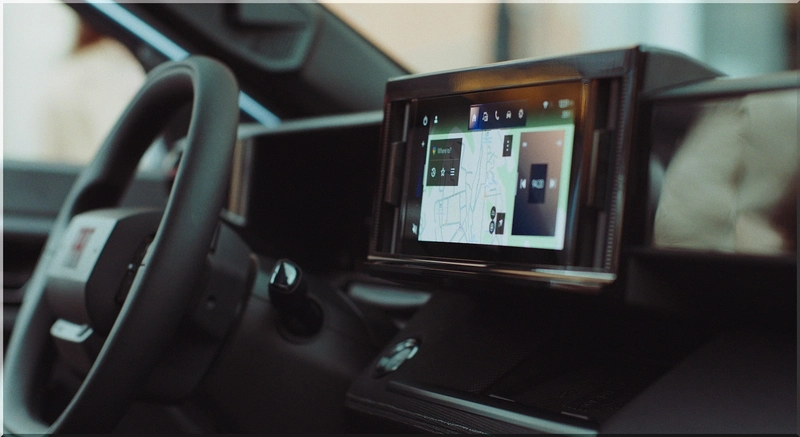
Inside, both vehicles share a common dashboard, steering wheel, and infotainment screen. This reduces production costs and ensures that whichever body style you choose, you get the same frustrating touch-sensitive climate controls.
The differences emerge behind the front seats.
Specifically, the SUV's upright tailgate and taller roofline create a more voluminous passenger cabin. The optional third row folds flat when not in use. The Fastback's sloping tailgate limits rear headroom but allows for a deeper trunk. Fiat claims 600 liters of trunk capacity for the Fastback, which exceeds most C-segment competitors by a meaningful margin. The SUV's trunk capacity is slightly smaller but remains adequate for a weekly grocery haul for a family of four.
Fiat claims best-in-class interior space for both, but that claim depends entirely on how one defines "class." If the class includes only vehicles built on the Smart Car platform, then the claim is true by definition.
Pricing and the Competitive Reality
Fiat wants to undercut the established players. The starting price is estimated at €20,000, or roughly £25,000 in the UK market. This positions the Grizzly between the Dacia Duster and the Skoda Kamiq, offering a value proposition that leverages Stellantis' massive scale.
Here is the estimated price structure by powertrain:
Petrol entry (1.2L manual): Approximately €20,000. This is the stripper model with steel wheels and manual windows, assuming those still exist.
Mild hybrid (1.2L 48V): Approximately €22,000 to €24,000. This is the sweet spot for most European retail buyers who want efficiency without the charging headache.
Battery-electric (44 kWh): Approximately €28,000 to €30,000. This targets urban dwellers with off-street parking.
Battery-electric (54 kWh): Approximately €30,000 to €32,000. This is the range champion and the logical upgrade for anyone who drives more than 50 kilometers per day.
The electric variants command a premium of roughly €8,000 to €10,000 over their petrol equivalents. The payback period on that premium depends on local fuel prices, electricity costs, and government incentives, but Fiat is betting that corporate fleet emissions targets will drive demand regardless of consumer math.
Pro-Tips for the Pragmatic Shopper
First, ignore the "Grizzly" name entirely. It implies off-road capability, but there is no all-wheel-drive system confirmed for either variant. You are buying a front-wheel-drive city crossover with plastic cladding and a raised ride height. Treat it accordingly.
Second, choose your body style based on your specific failure points. If your children are tall, buy the SUV. If you regularly haul flat-pack furniture from IKEA, buy the Fastback. The 600-liter trunk in the Fastback will accommodate a Billy bookcase without folding the rear seats, which is a surprisingly specific but useful metric.
Third, evaluate total cost of ownership rather than the sticker price. The mild hybrid offers the lowest running costs for mixed driving without requiring a home charger. The 1.2-liter pure petrol is cheaper upfront but will cost more at the pump over a three-year ownership cycle. The 54 kWh EV only makes financial sense if you have cheap overnight electricity and a predictable daily range under 250 kilometers.
Fourth, check regional availability carefully. Europe receives the full powertrain menu in late 2026. The UK waits until 2027. Latin America gets the Grizzly family in 2027, but initial reports suggest only the petrol and hybrid variants will launch there, with electric versions following later.
The Final Verdict
Fiat has created two competent, affordable vehicles that share a platform, a front end, and a dashboard. The differentiation is entirely in the rear bodywork and the roofline. The SUV offers maximum family utility and a theoretical third row. The Fastback offers superior cargo volume and a style statement that essentially says, "I wanted a sedan, but I also wanted a slightly higher seating position."
The Smart Car platform delivers the economies of scale necessary to price these vehicles below the mainstream competition. The Moroccan production strategy protects the profit margins. Olivier Francois described the reveal as "FIAT doing what it has always done best—making family transportation simple, accessible and truly affordable." That is marketing speak for "we built a cheap crossover on an existing platform, and we are going to sell a million of them."
The Grizzly twins are not a revolution. They are a pragmatic answer to the question of how to sell two different bodies to two different buyer groups without designing two separate chassis. For families who need space on a budget, and for style-conscious buyers who still need to transport a refrigerator, the Grizzly family offers a logical, data-supported choice. Just do not expect it to climb any mountains, and definitely do not expect it to maul any salmon.